STATION
DefaultElectric rotors. Hospital, hover, cruise, hoist, landing. No fire.
- Rotors + Loop A
- Hoist allowed if tiles cold
- Default mode
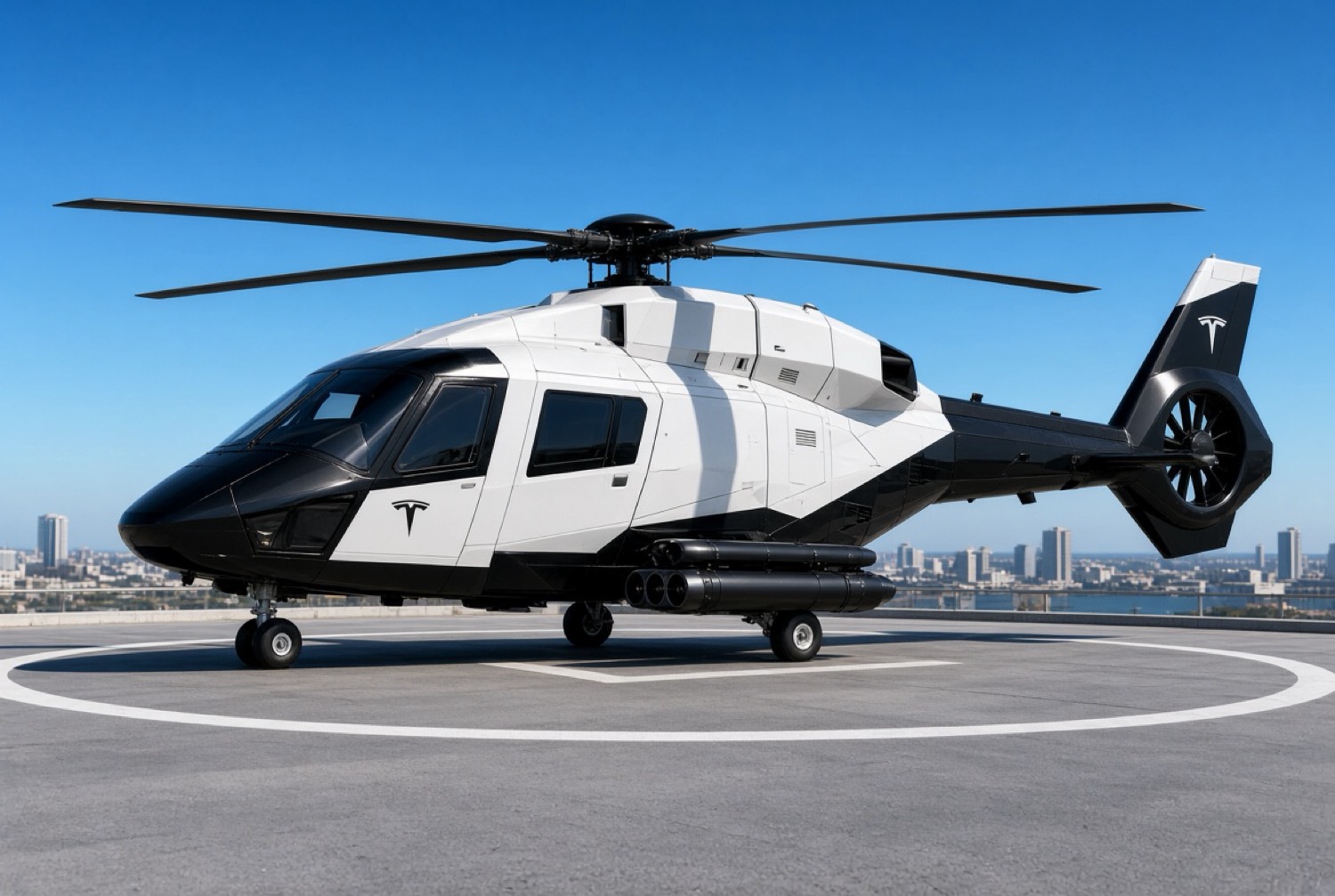
Tesla Air Rescue · Chopperocket
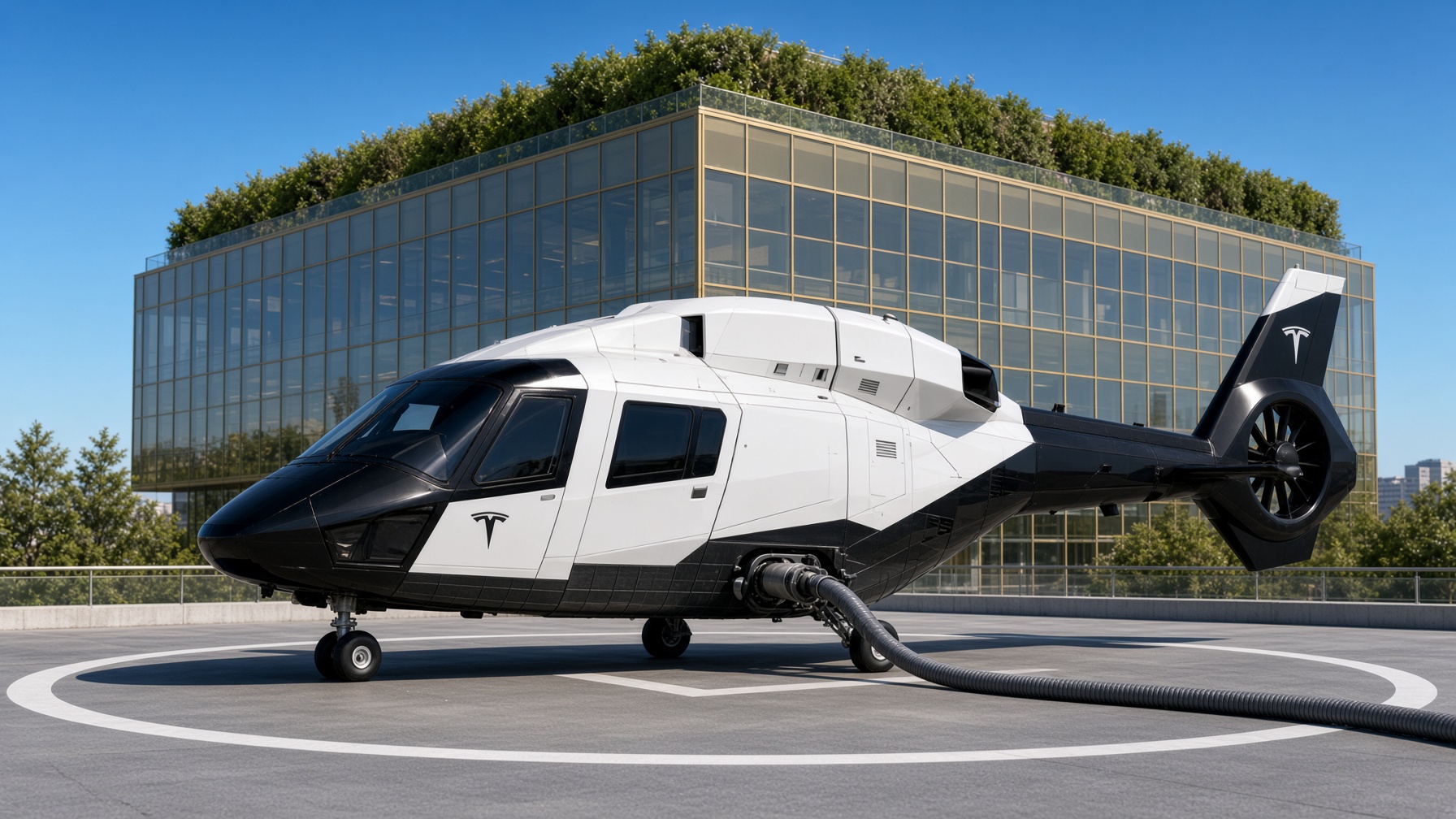
An electric EMS helicopter that carries two short methalox rocket pods for a guarded, high-altitude dash, then soaks heat before it is allowed to hoist or land on a hospital roof.
Golden-hour EMS helicopters cruise 130–160 kt. A 30–45 s rocket pulse buys a speed gap without turning the airframe into a cruise rocket. Rotors remain the airplane. Rockets are a kit. If the kit fails a gate, strip it. The ship is still a helicopter.
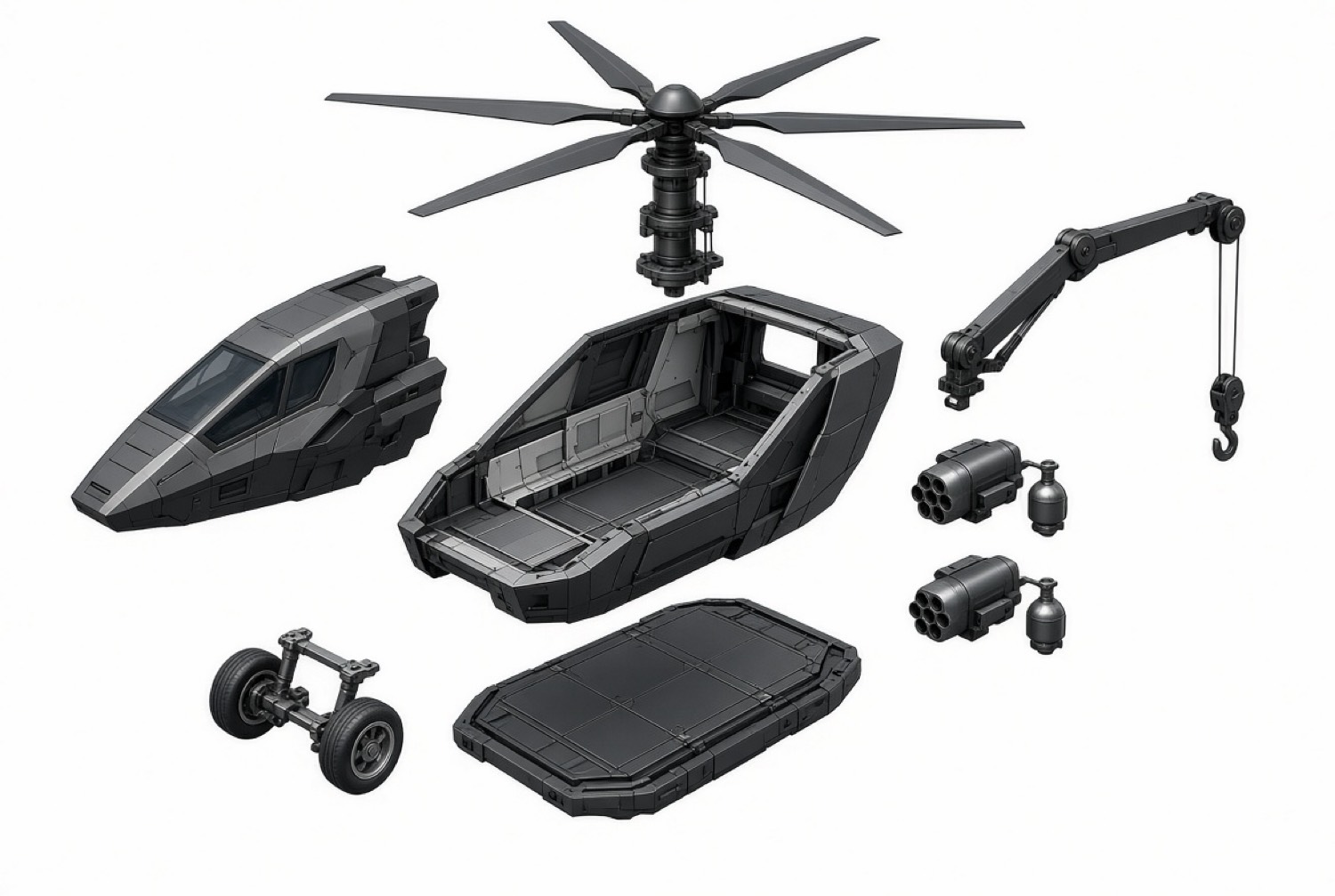
~H145 / 4,200 kg MTOW. 1 pilot + 1–2 medics. 2 litters. 5-blade main + fenestron. Wheeled tricycle. Rear clamshell ramp default; starboard swing-out hoist is the exception. Chin camera + searchlight. Red/blue EMS bar. Starlink. FSD-analog flight director — not unoccupied EMS.
Do not drift the airframe. Do not make it a jet. Rockets are two short pods. The cabin is still two litters and a ramp.
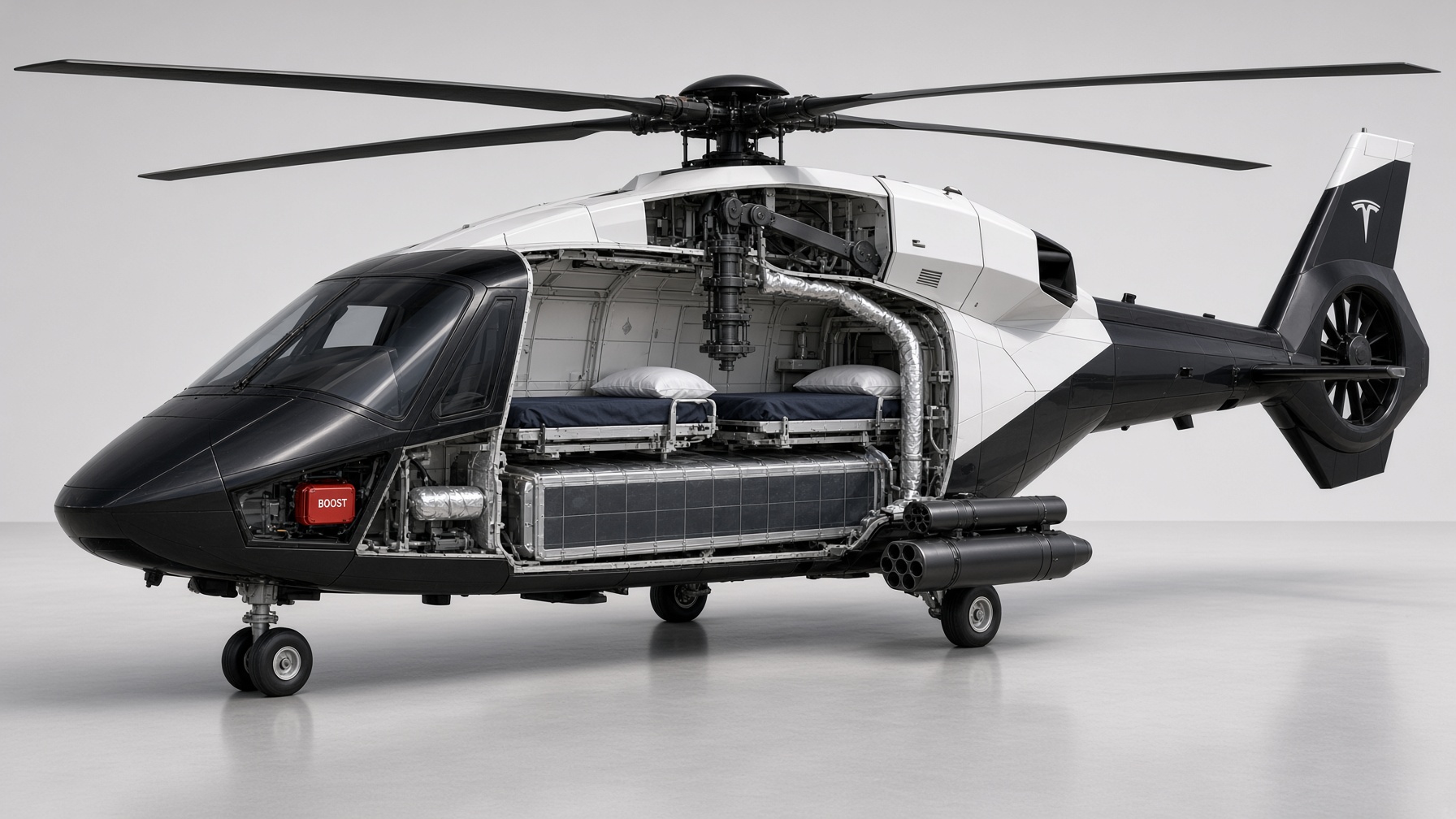
Two NATO litters, side by side
Tap a marker · same airframe
Any fail → RECOVERY → STATION. BOOST is a guarded hold. Release always drops into SOAK. Hoist is a privilege the tiles grant.
STATION
Rotors + Loop A
BOOST
Guarded hold on the stick / red cockpit switch
SOAK
Always drop to SOAK on release
RECOVERY
A dead rocket kit must leave a flyable EMS helicopter
Guarded hold + alt OK → BOOST · release / burn end → SOAK · tiles ≤ limit → STATION · 1-pod fail → RECOVERY
STATION. Rotors are the airplane.
Hold the red control to fire. Release always soaks. This is the airplane, not a demo switch.
Electric rotors. Hospital, hover, cruise, hoist, landing. No fire.
Twin compact methalox pods, ~18 kN total. Burn 30–45 s, pulsed, not continuous cruise.
Cryo jacket trickle + belly tiles + rotor downwash as the radiator.
One-pod slam-cut or inhibit. Rotors carry the ship. Land in STATION.
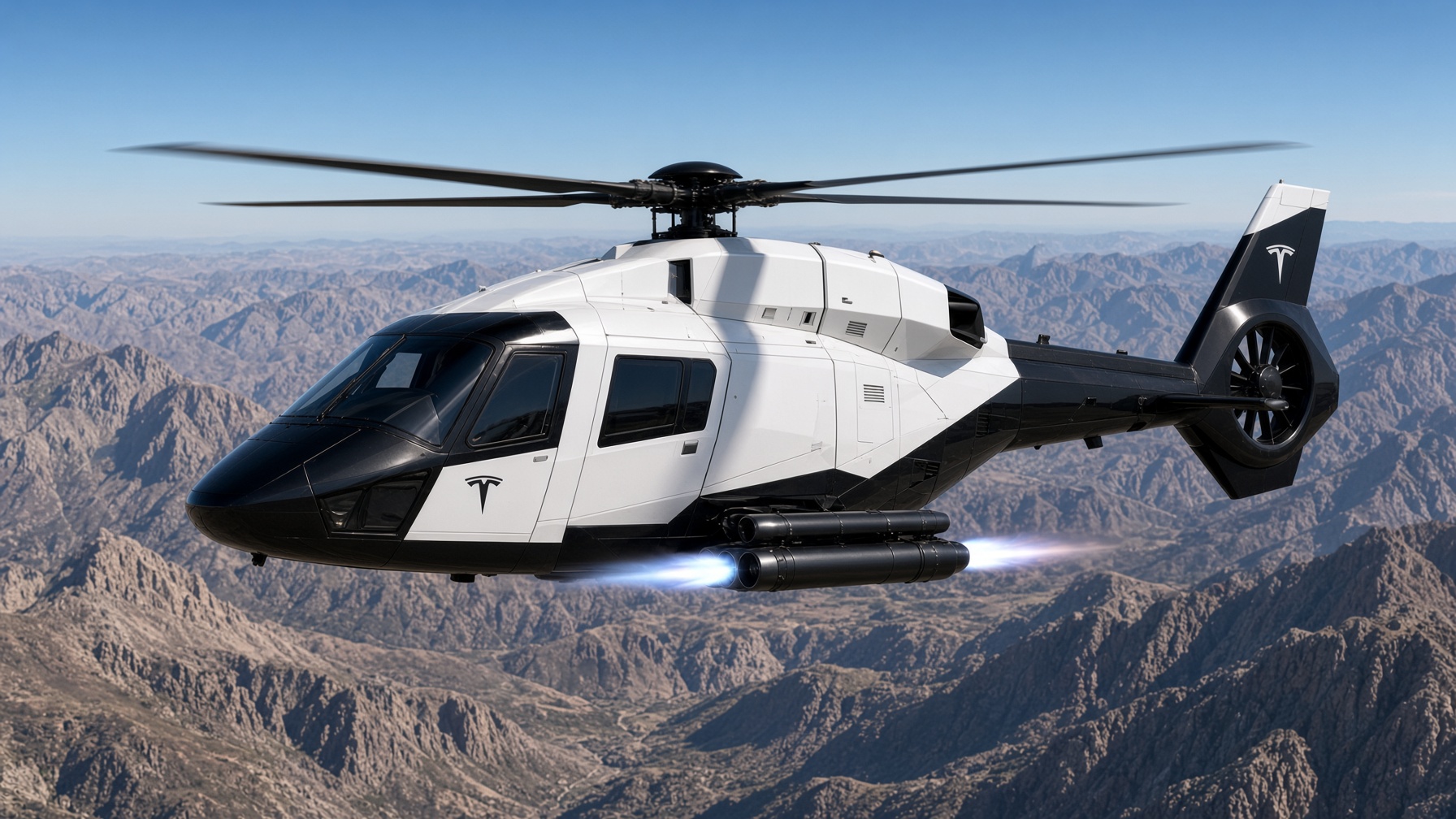
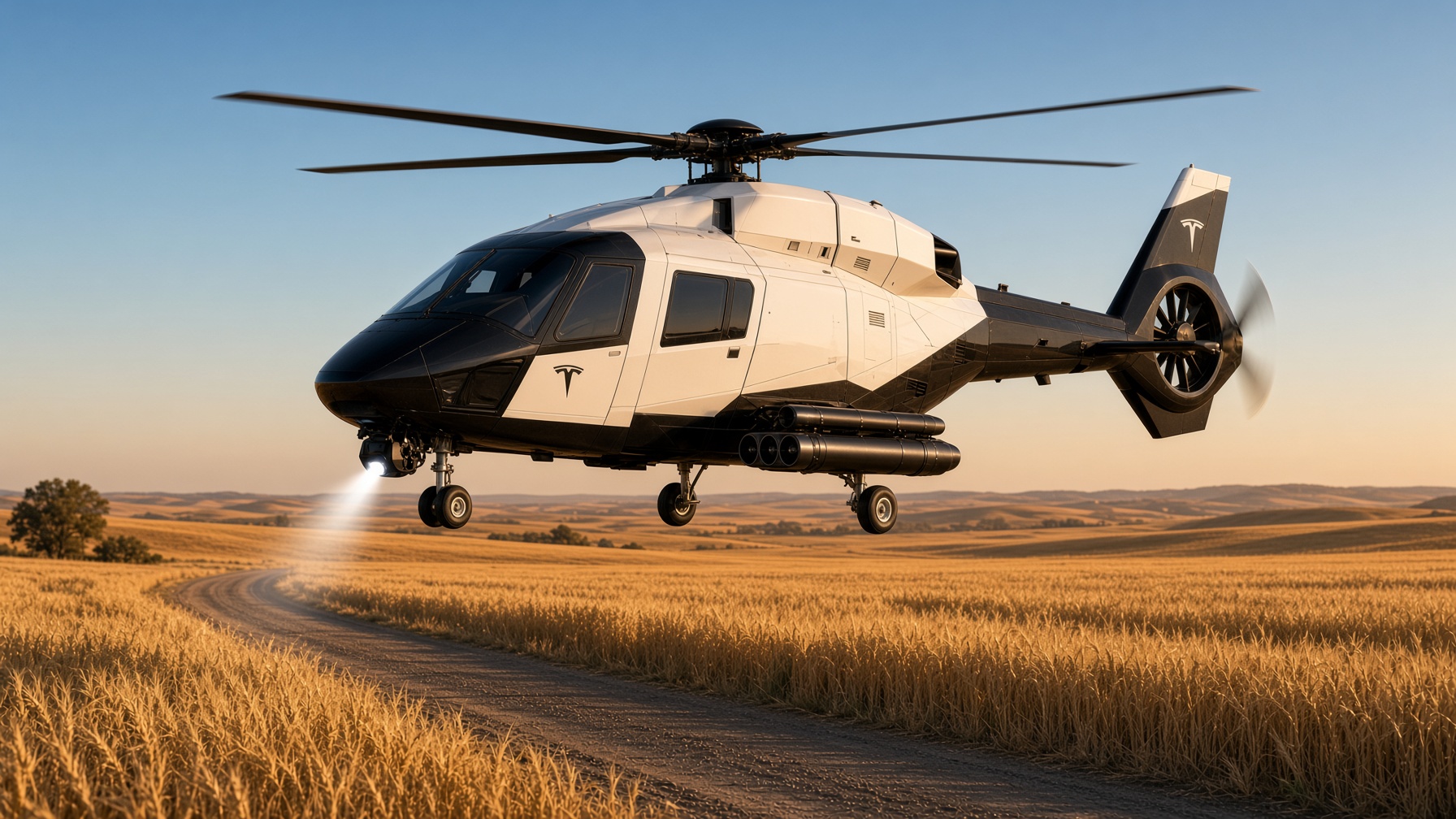
Any growth that breaks 4,200 kg without a matching deletion dies. Rocket kit + usable propellant is 520 kg — a privilege the rest of the helicopter can live without.
1550
kg
Cybertruck-facet skins over a single tub.
Kill rule: miss mass, soak, or one-pod fail at a gate → strip rocket kit. Aircraft remains an electric EMS helicopter.
Target: soak-to-hoist ≤ 8 minutes. Miss it → redesign jacket/tiles before cutting more carbon. Mode interlock is the airplane.
Loop A
Heat pump + PCM + downwash heat exchanger. Station reject into rotor wash. This is how the ship lives most hours.
Loop B
Cryo jacket around chambers and nozzles after burn. Tiles as line-replaceable thermal capacitors. Change them like brake pads.
Loop H
Boom is a swing-out so it is not cooked against a hot belly. Mast can act as a thermal capacitor.
Mast, pack, Loop A, downwash fans. Cert path is rotorcraft + JATO-style supplement. Do not invent a new category on day one.
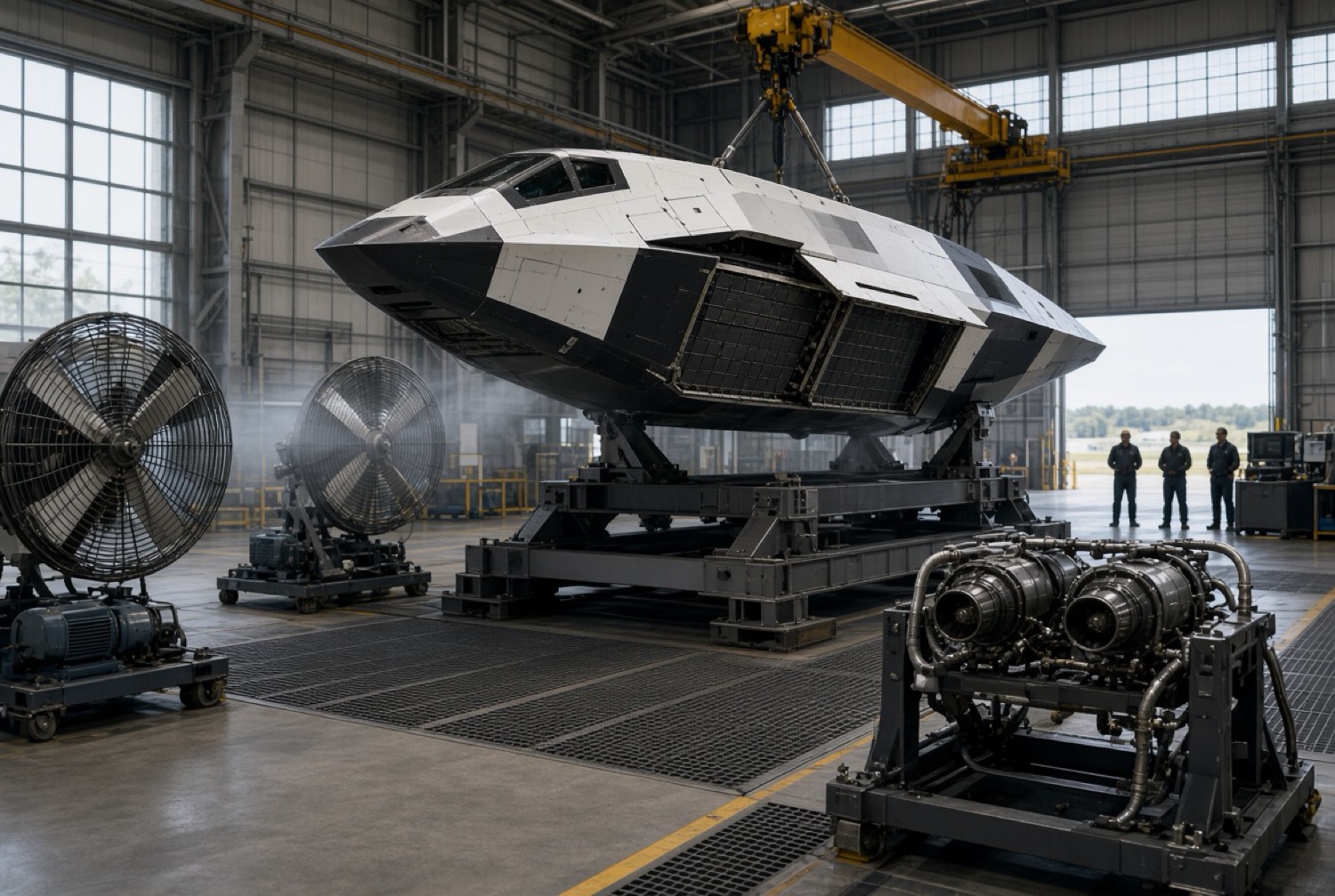
Downwash stand-in
P1-1. Fans reject Loop A as rotor wash.
P1-1
Mast motors + Loop A rejecting into a fan that stands in for rotor wash.
P1-2
30 s hot-fire, then cryo-jacket soak — measure minutes to tile-safe.
P1-3
Slam-cut of one pod on load cells. Rotors must carry the ship.
P1-4
Swing-out hoist cycling against a heat-blanket belly.
Convert a glass cube into a daylight hospital. Operable windows (IR reject, windows actually open). Rooftop healing garden + skybridges. Separate circular TLOF. Trauma elevator from pad to bay. Daylight evidence is modest — pain, mood, some LOS. It is not a cure. Design for light and air anyway.
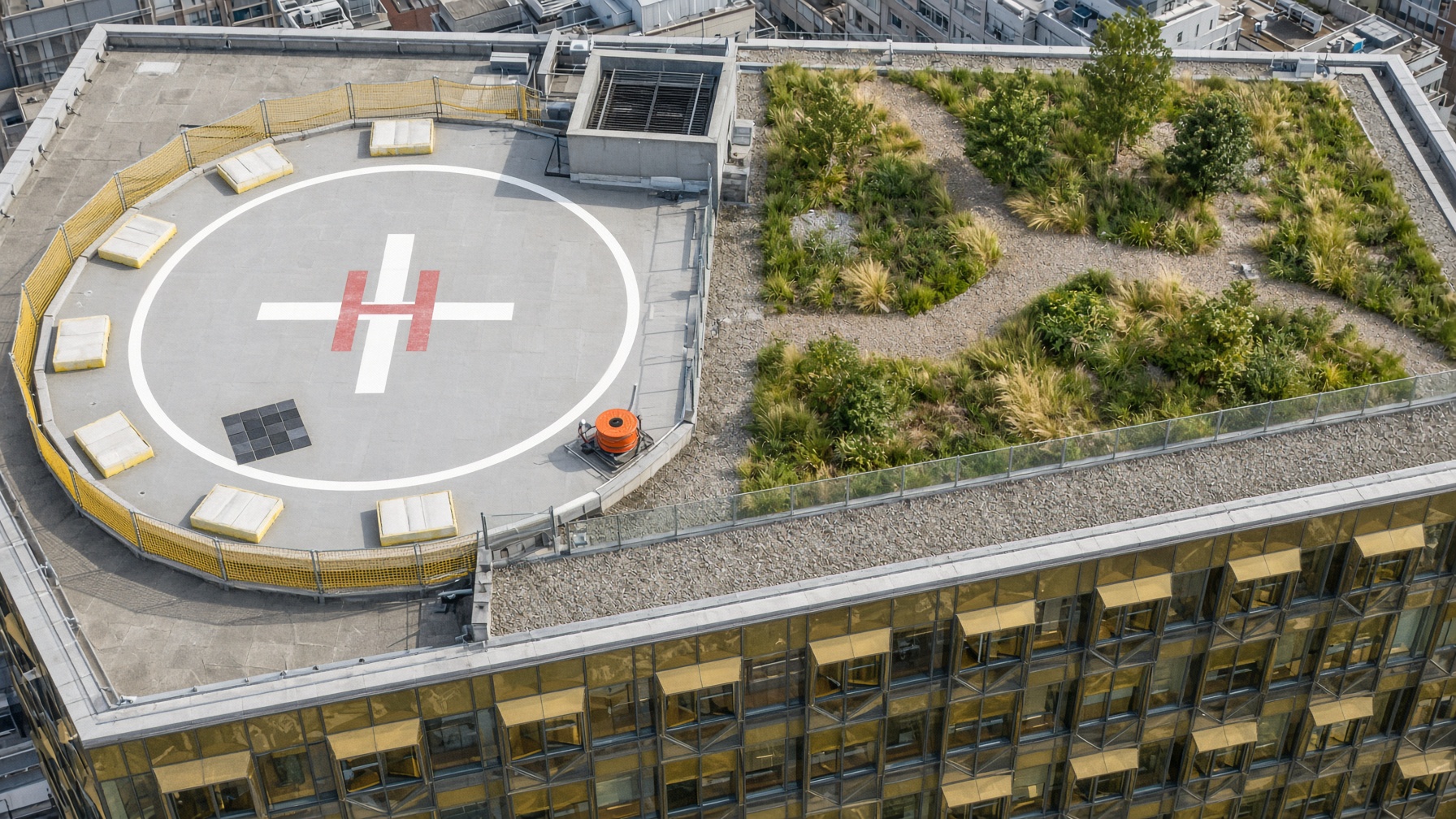
Circular TLOF
Red H on a white cross. Hard deck. Perimeter lights.
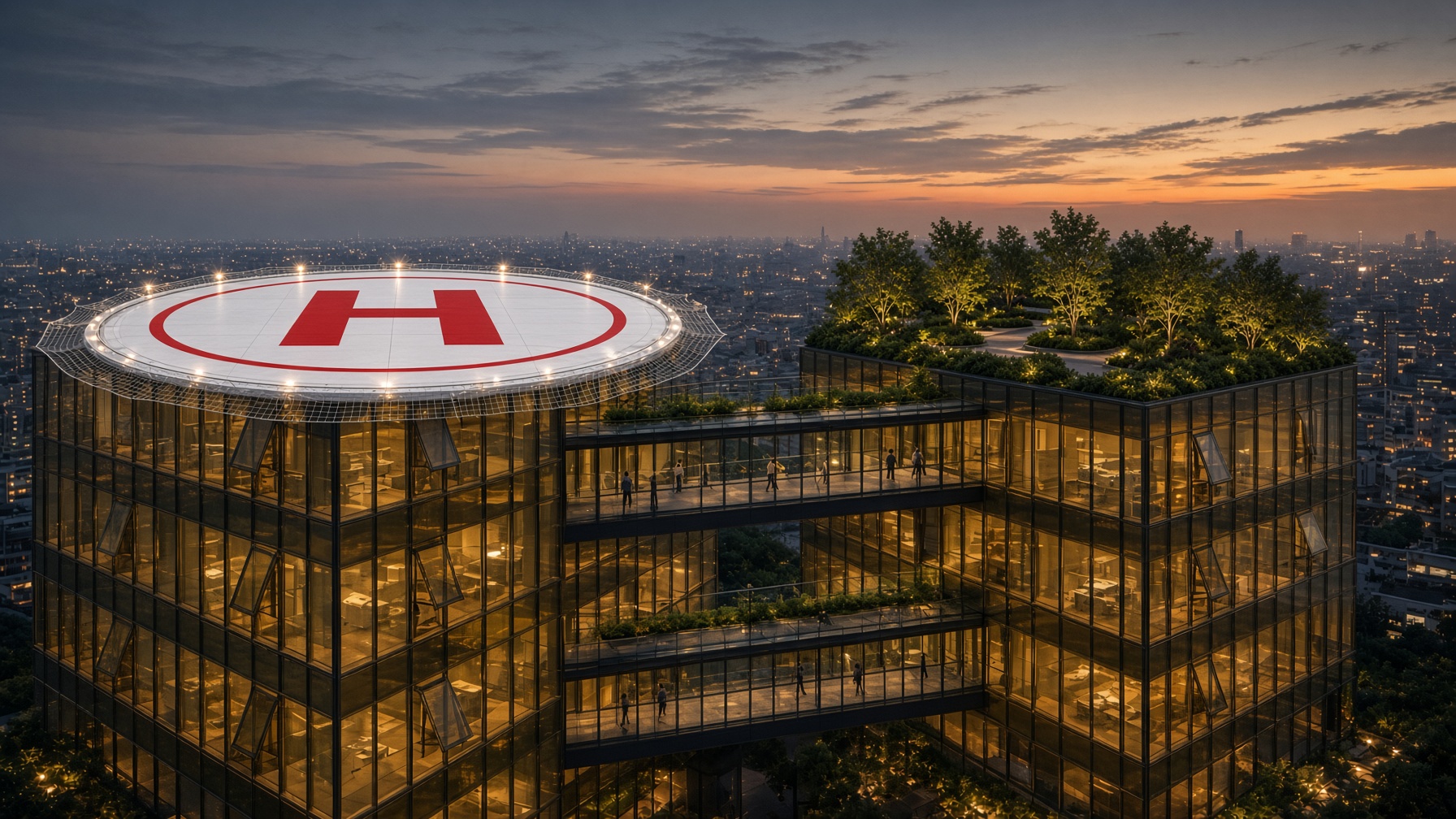


Rotorcraft EMS already kills crews. Adding a boost mode adds plume, soak, and mode-error as new crash classes. The interlock is the life-safety system for the people inside the ship.
RiskHot methalox exhaust, startle, debris, pad-tile heating.
ControlNo BOOST below 800 ft AGL. No BOOST over the TLOF, garden, or city street. Pad is a hard deck. Garden is separate and windward.
Kill rule: miss mass, soak time, or one-pod fail at a gate → strip the rocket kit. Aircraft remains an electric EMS helicopter.
P0 · 0–4 mo
G1 · Mass + thermal closed
P1 · 4–9 mo
G2 · Soak ≤ 8 min · 1-pod fail OK
P2 · 9–15 mo
G3 · Ground bird complete
P3 · 15–20 mo
G4 · Flight + JATO packet
P4 · 20–24 mo
Chief engineer · Safety · Cert lead
Structures
Powertrain
Propulsion
EMS integ.
Civil + flight ops
Thermo
Flight software
Certification
New
A 30–45 s methalox privilege on an electric helicopter. Rotors remain the airplane. Rockets are a kit.
Mode machine is the airplane: STATION ⇄ BOOST → SOAK → STATION. Hoist is a privilege the tiles grant.
Gold astronaut-visor coating on windows that actually open, plus a hard-deck TLOF separate from the garden, plus a chiller umbilical.
Borrowed
~4,200 kg MTOW, 1 pilot + medics, 2 litters, 5-blade + fenestron, wheeled tricycle. Not a new rotorcraft category.
Rotorcraft + JATO-style supplement. Do not invent a new category on day one.
Astronaut visor glass, phase-change thermal capacitors, and rotor-wash heat exchangers already exist. This program couples them.
The aircraft exists to move two dying people faster. That is the only justification that can carry a rocket on a hospital roof. Everything else is a tax. Pay the tax in the open.
A 30–45 s boost that cuts 8–12 minutes off a 40–80 km rural dash is inside the window that changes some trauma, stroke, STEMI, remote birth cases — not all of them. Rear ramp + roof-to-trauma elevator cuts the second delay. One extra save per aircraft-year pays the program in human terms.
Wildlife literature is consistent: the rotor, not the rocket, is the animal problem. Write a wildlife rule into ops: no training circuits over calving/nesting slopes. Rescue is exempt. Practice is not.
A typical European HEMS mission burns ~225 kg Jet A-1 (~0.71 t CO₂). Rescue One on rotors is a ~350 kWh-class guess. A full 200 kg methalox load is ~120 kg CO₂. Design intent: boost on ~1 in 5 missions. Do not claim zero.
Order-of-magnitude, not a consultant PDF. 20-ship / 400 missions is the annex default.
Grid
CO₂ / year
Station 90 kg/mission + 1600 boosts
Coal collapses the electric story.
Rescue One burns in the lower troposphere, 30–45 s, a few hundred kilograms a year per ship. Clean burn is CO₂ + water. Real engines run fuel-rich, so you also get CO, leftover H₂, some soot, and plume-afterburning NOx. That is local air quality. It is not a Montreal Protocol event. No solid-pack JATO. Methalox or the kit is deleted.
Bottom line: Rescue One is not a climate invention. It is a time invention that can be less dirty than the helicopter it replaces if the grid is clean, the methane is tight, and the fire is rare. The lives it saves are local and immediate. The planet cost is global and slow. Keep both numbers on the same page.